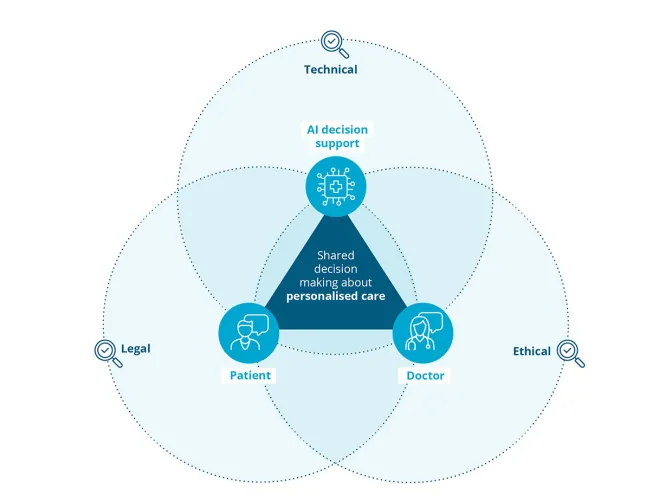
AI-technologie in de gezondheidszorg kan helpen bij het stellen van een diagnose, het ontwikkelen van een persoonlijk behandelplan en adequate follow-up. In tegenstelling tot bijvoorbeeld het bouwen van een MRI-scanner, zijn de ontwikkeling en innerlijke werking van AI-technologie aanzienlijk minder goed gedocumenteerd. Artsen en patiënten kunnen de technologie daarom niet vertrouwen op een vergelijkbaar niveau als de MRI-scanner. In dit ELSA-lab bestuderen we de technologische, juridische en klinisch-ethische aspecten van AI-technologie die gecertificeerd is om verantwoord te worden gebruikt.
AI technology in healthcare can help with establishing a diagnosis, developing a personal treatment plan, and adequate follow-up. In contrast to, for example, the development of an MRI-scanner, the development and operation of AI technology “under the hood” are considerably less documented. As a result of this, doctors and patients cannot trust the technology and be accountable when using it at the same level as this MRI-scanner. In this ELSA lab we study the technological, legal, and clinical-ethical aspects of AI technology that is certified to be used responsibly.
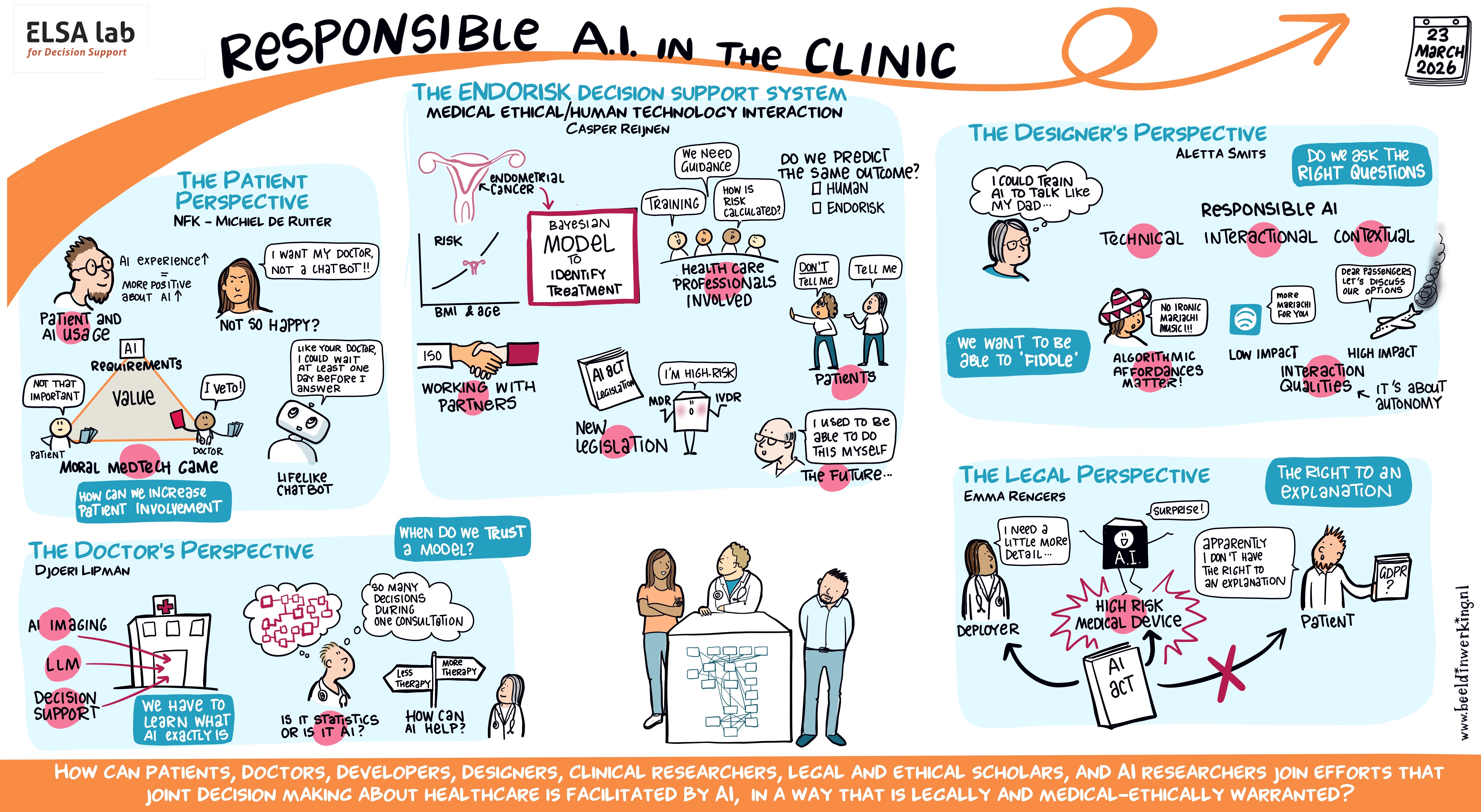
Within the ELSA lab, several partners and stakeholders work together. The ELSA lab is open for new partners that want to contribute, add a case study, or collaborate on research projects.